Friday, 2 September 2011

St Mary Magdalene, Newark


Tower and spire, above the west door

The church of St Mary Magdalene has stood for many centuries near to the medieval market place in the centre of Newark-on-Trent. Standing on the site of an earlier Saxon church, the oldest part of the current structure is the crypt dating from around 1180. This currently houses the town plate, a collection of silver and gilded plate along with siege coins from the English Civil War of 1642 to 1646.

                                         View of nave and rood screen from the west door


The church was built over several centuries with various parts being many years between being started and completed. The majority of the building was constructed between 1220 and 1400 but building was still going on unto 1540 which is quite late for a medieval parish church.

                                                  The Choir and High Altar


The church is reputed to be the 5th largest parish church in England. The spire is 256 feet high and access is occasionally available to the top of the tower at the base of the spire. A good view of the surrounding area can be had from up there. You might also see the hole on the north side of the spire. This was made by a cannon ball, fired during one of the sieges of Newark in the civil war when the town was a Royalist garrison. The church is large enough to become a cathedral should the need ever arise.

                                        North side of church taken from the church gardens


Although there is no burial ground any more there are still bodies lying in the formal gardens on the north side of the building. The surrounding walls are lined with gravestones standing in front and there is a mass grave in the centre of the garden for troops killed in the civil war.

                 Chapels along the east wall behind the High Altar, the crypt entrance is nearby


Many of the chapels around the church were built by the merchant guilds or private citizens. A major benefactor to the church was Thomas Magnus (c.1463 - 1550). He was a son of the town and became Dean of York Minster, as well as being an emissary of Henry VIII. He also founded the grammar school bearing his name in the town in 1540. This building still exists across the road from the east front of the church and a school bearing his name still exists in the town.

                                  North side of the nave, the left side arch supports the tower


I had a strange experience one night whilst walking past the church on my way home. It was around 12.30 and I walked by the north side pathway when I heard organ music from inside. There were no lights on and the music was very quiet and subdued. Curious, I went up to a window and peered in as best I could, only thing I could see were the shadows created by the street light from outside. The music kept playing and was not coming from the main organ and there was no one inside. Knowing the church was locked I scurried on my way home taking a short cut across the gardens.


                                                             South porch and spire


A fine piece of architecture from the medieval period, it is well worth passing a few minutes wandering around. And on completion of looking around, go past the east end of the church where the War Memorial stands to Appletongate. On the left you will see the old Magnus School building which until recently served as the town museum. To the right you will see the Fox & Crown pub, serves excellent food and various real ales, a fine end to a stroll around St Mary's in Newark!


Sunday, 21 August 2011

Moscow March 2006


I visited Moscow back in March 2006 for a long weekend. My wife was working about 4 hours drive to the south in a town called Voronetz and we met in a Holiday Inn to the north of Red Square.

                                                   Red Square and the Moscow Kremlin


Not a good start to the visit as KLM lost my bag at Schiphol (Amsterdam) airport, though they did arrive safely 24 hours later. There was deep snow on the ground and the themperature around -6 Celsius as I remember it.

                                                          Outside Red Square


Although we visited several places the highlight was a tour around the Kremlin and its numerous cathedrals. The name 'Kremlin' means a fort and there are many around Russia, though the name is normally applied to the one in Moscow. The Kremlin is basically a town within a city and would have been self sufficient in times of old. Today it houses the duma, the Russian parliament as well as other important buildings.

                                                                      The Duma


The cathedrals inside the Kremlin are fantastic. Some were the personal places of the Czars and consequently are highly decorated. I took some pictures inside but they do not do justice to the decorations. All are of the Russian Orthodox religion.

                                                        Interior of a cathedral


In a moment of madness I took my coat off and had my picture taken in front of St basil's Cathedral at the end of Red Square. It was snowing and cold, the reason why was because I was wearing a T shirt of a friend who owns a haulage company. On his web site are pictures from around the globe of people wearing these shirts with his logo on. The things I do for mates.....!!

                                                     Your author in front of St Basils's


Well worth a visit. Becoming commercialised with many western goods in the shops. Still good value places to eat though. An experience well worth trying for those who like something different. Recommended.


The Green Hut


A bit of a departure in this topic as it is about a roadside cafe! The Green Hut has been open a number of years situated at a place known as Forest Corner. It serves an excellent cooked breakfast amongst other meals from around 6 a.m. to 2 p.m. in the afternoon.

                                                                  The Green Hut


It is popular with motorists, walkers and cyclists alike and has internal as well as outside seating available. When I cycle in the Sherwood area  I often call in for a coffee and a bacon 'banjo' (a bacon roll so called as it is large and round like a banjo, and when you drop crumbs down your front, the action of flicking them off looks like someone playing a banjo). I also call in with the wife frequently for a breakfast when out and about in the area.

                                                        Rear view from the Green Hut


The area to the rear of the cafe is known as Bilhaugh. This is one of the 2 ancient areas of Sherwood that remain. Also close by on the opposite side of the road is the area known as Sherwood heath which is on the edge of the other area known as Birklands (where the visitors centre is situated a couple of miles away. A very nice place to eat, drink and gaze on the scenery when the weather is good!

                                                    Panoramic view of the Green Hut


I have nothing to do with the Green hut whatsoever, I am just putting it here on the blog as a place I like to visit. If you wish to call in for a brew and a banjo, you will find it on the A616 Ollerton to Worksop road about 200 yards north of the A614/616/6075 roundabout known locally as Ollerton Island.


Tuesday, 16 August 2011

27th Robin Hood Festival


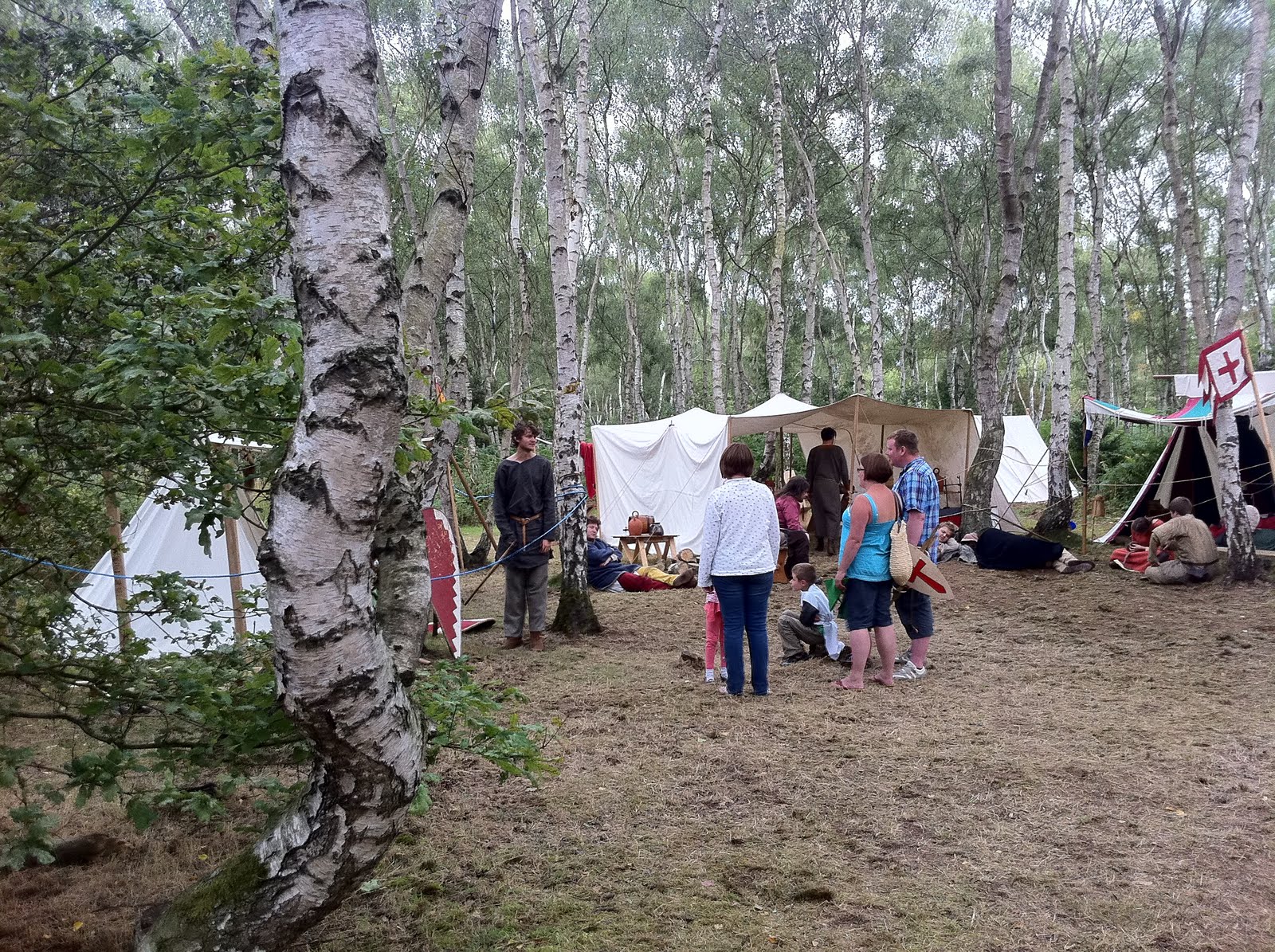
A few pics of the 27th Robin Hood Festival. I didn't get chance to take many as I was 1) late getting there, and, 2) met several people I know and ended up chatting with them.


                                                   Map of the site by Notts County Council


If you like these then head over to my Youtube channel and view the video clip. Find it at   www.youtube.com/user/albieinthewood


Saturday, 6 August 2011

Milton Mausoleum

Milton Mausoleum was built by the 4th Duke of Newcastle as a final resting place for his wife. She died in London giving birth to twins who also did not survive. Initially interred in London, the Duke was going to have them buried in the family vault in the village of Bothamsall near his ancestral home at Haughton. He was then persuaded to re-build the church at Markham Clinton, where the family had originated from at the time of the Norman Conquest. However, a decision was made to build the mausoleum at nearby Milton half a mile down the lane from Markham.

                                                              Milton Mausoleum 


Building work started in 1824 but was not completed until 1833 when the Archbishop of York consecrated it. The Duchess and children were interred there the following year. Also intended to replace the existing parish church in Milton, it was used for services by the locals as well as being the private mausoleum and burial place for the Newcastle's. However by the 1880's the 7th Duke had built a gothic church at the side of Clumber House where members of the family used it as their place of worship and burial. Milton fell out of use with the villagers reverting to the medieval parish for their services.


By the 1970's the Newcastle's could not afford the upkeep of the mausoleum and it passed into the care of the Churches Commission. They now keep the fabric of the building safe and it is open to the public one Sunday in every month. The interior is very basic with no ornaments or items of value kept there. In fact only one side of the church has pews, the other being bare. No heating makes it feel cold and damp. it is still being used for burials by surrounding villages on occasion.


Many people in the locale have often regarded the place as haunted and tales of witchcraft have been mentioned. What is certain was that the mausoleum was desecrated in the 1980's by thieves. They broke into the mausoleum and into the crypt where the bodies lay. Fuelled by stories that the 4th Duchess was buried with all her jewels they smashed the coffins to find the treasure. The story of the jewels was false ond nothing was found. However, rumours that all the corpses had their hands removed in the vain search for the jewels were rife. After the desecration the entry to the crypt was permanently sealed


Tuesday, 2 August 2011

Marrakech Souk

As well as posting about the area I live in and around, I thought i would put some articles in about the places I have travelled to over the years. I have been really lucky with work as it often means  travelling around the planet. It has allowed me to visit many places over the last 21 years working with my company. At the last count the total, number of countries visited is in excess of 45, many on multiple occasions.

                                          A rear view of me on one of the streets in the souk


I have spent a lot of time in the Middle East over the years, so my wife and I had a short holiday in Marrakech, Morocco in 2010. We didn't venture much further than the souk (market) in the city centre as it was a 'flop and drop' break spent mostly by the pool. I am often drawn to souks as I am fascinated by the sights, smell, range of goods on sale and the general ambience.

The souk is fairly typical of those in other parts of North Africa offering leather goods and local spices. Kitchenware and clothing are also popular commodities sold here.

                                                  One of the many entrances to the souk


There are a myriad of streets, tightly packed shops and dim lanes to entice you in. It is very easy to get lost and disorientated. You can wander around for hours and not re-visit a stall that you have seen before. There is much hustle and bustle with many traders trying to entice you into their shops. Very reminiscent of the souk in Tunis (Tunisia) but without the same pressure to buy.

                                      Traditional rugs and carpets on one of the wider streets


I have to say that nothing caught my eye, however, the wife left with a couple of pairs of good quality suede slippers at a good price. Having brought back various trinkets from the Arab world there was nothing here that I haven't seen in other countries (call me tight with my money). For those of you living in Europe (and further afield too) who have never sample the Arabic world Morocco is an excellent place to start. Recommended if you fancy something a bit different to the Mediterranean resorts or Tenerife.

Monday, 1 August 2011

The Lost Villages

There are around 60 alleged Deserted Medieval Villages (DMV's) in the county of Nottinghamshire. A few of these fall within the area of Sherwood with many more in other areas of the shire.

Most people assume that deserted villages were the result of the Black death in the late 1340's. However this doesn't appear to be the case for those that we have records of. Some were the victims of poor farming land, some just moved location by a few hundred metres to existing village locations. Some were the result of monastic clearance.

 Rufford Abbey undercroft and the remains of the later mansion that was destroyed by fire in the 1950's


The village of Grimston lay between the village of Wellow and the hamlet of Ompton on the modern A616 road a couple of miles east of Rufford Abbey. Local legend has it that it was swallowed into the earth by an earthquake. The less romantic truth it was one of the villages that was removed by the monks of Ruffed so they could acquire the farming land surrounding it. This happened in the years after the abbey was founded around 1146. Grimston was not alone, the villages of Inkersall, Beesthorpe and Cratley suffered the same fate - even the village of Rufford itself disappeared. The villagers were moved to the new settlement at Wellow where they continue farming the land to this day.

Nothing much visible remains of these DMV's as most of the land has been ploughed up over the centuries so removing any evidence of their existence. In fact, the locations of some DMV's such as Cratley is open to debate. All of these DMV's are listed in the Domesday Book, only Wellow is not.

    The location of Willoughby by Walesby, the earthworks of the settlement are visible from the air

There is a DMV only 200 meters east of my own village of Walesby. This was the original Saxon settlement (although it has a Danish name) and was recorded as 'Wilgebi' in Domesday. Although the reasons for this becoming a DMV are unclear it would seem that poor conditions may have played a part. The DMV lies on a clay soil near a stream and the area would have been water-logged at various times of the year, especially in the early 1300\s when there was a mini 'ice age' when the climate was cooler and much wetter.

The village of Walesby is on slightly higher ground and on a slightly better soil which would have been drier - parts of the village have the same well-drained sandy soil that the forest lies on. It seems that the villagers of Willoughby migrated the 200 metres west across the stream for a better life. The name of Willoughby is preserved in the farm that the earthworks are adjacent to.

Just north of Walesby is the hamlet of Haughton, a few houses that sit on the road between Ollerton and Retford. Again, another DMV lies somewhere in this locality but its exact location is unclear. The present hamlet is over 400 metres west of the location of the long since demolished Haughton Hall.

                                     The remains of Haughton Chapel, dedicated to St James


Another 400 or more metres to the east of the Hall are the remains of Haughton Chapel. This was the church for the original village of Haughton so it must have been somewhere nearby - the current hamlet is over half a mile west along the banks of the River Maun. The chapel became attached to the mansion house until it was demolished in the 1770's, the chapel was already in a ruinous state by then. The reasons for Haughton becoming deserted are also unclear but may have been related to when the original mansion was built in the early 1400's.

The majority of the larger DMV's appear to have been abandoned in the 1500's and 1600's. This was mainly due to the landowners of the area enclosing the land for their own use and agriculture. Around 400 villages and towns in Nottinghamshire were mentioned in Domesday, most of these still exist today.